
Caring for Solid Wood Furniture in Colorado's Dry Climate
Northern Colorado is beautiful and brutal on wood furniture at the same time. Humidity here can swing from single digits in winter (thanks to forced-air heat) to a relatively humid summer monsoon season, and solid wood moves with every swing. That movement is normal. Left unmanaged, it's also what causes the cracking, joint loosening, and warping we see most often in local pieces.
Wood is hygroscopic; it absorbs and releases moisture from the air. When Colorado's winter heating drops indoor humidity into the teens or single digits, wood contracts. If it dries faster than the piece's structure can accommodate, you get checking (surface cracks) or joints that work themselves loose. A humidifier that keeps indoor relative humidity in the 35–45% range does more to protect furniture than any finish.
A few other things that matter here specifically: keep solid wood pieces out of direct, south-facing window light where possible. Colorado's high-altitude sun fades and dries finishes faster than most people expect. Avoid placing furniture directly against forced-air vents. And if you notice a drawer sticking in summer and loose in winter, that's the wood doing exactly what wood does. It's not usually a sign of a problem, unless a joint has actually failed.
If a piece has already cracked, checked, or loosened, most of that is repairable, and often an opportunity to also address whatever originally caused it. We're happy to take a look.
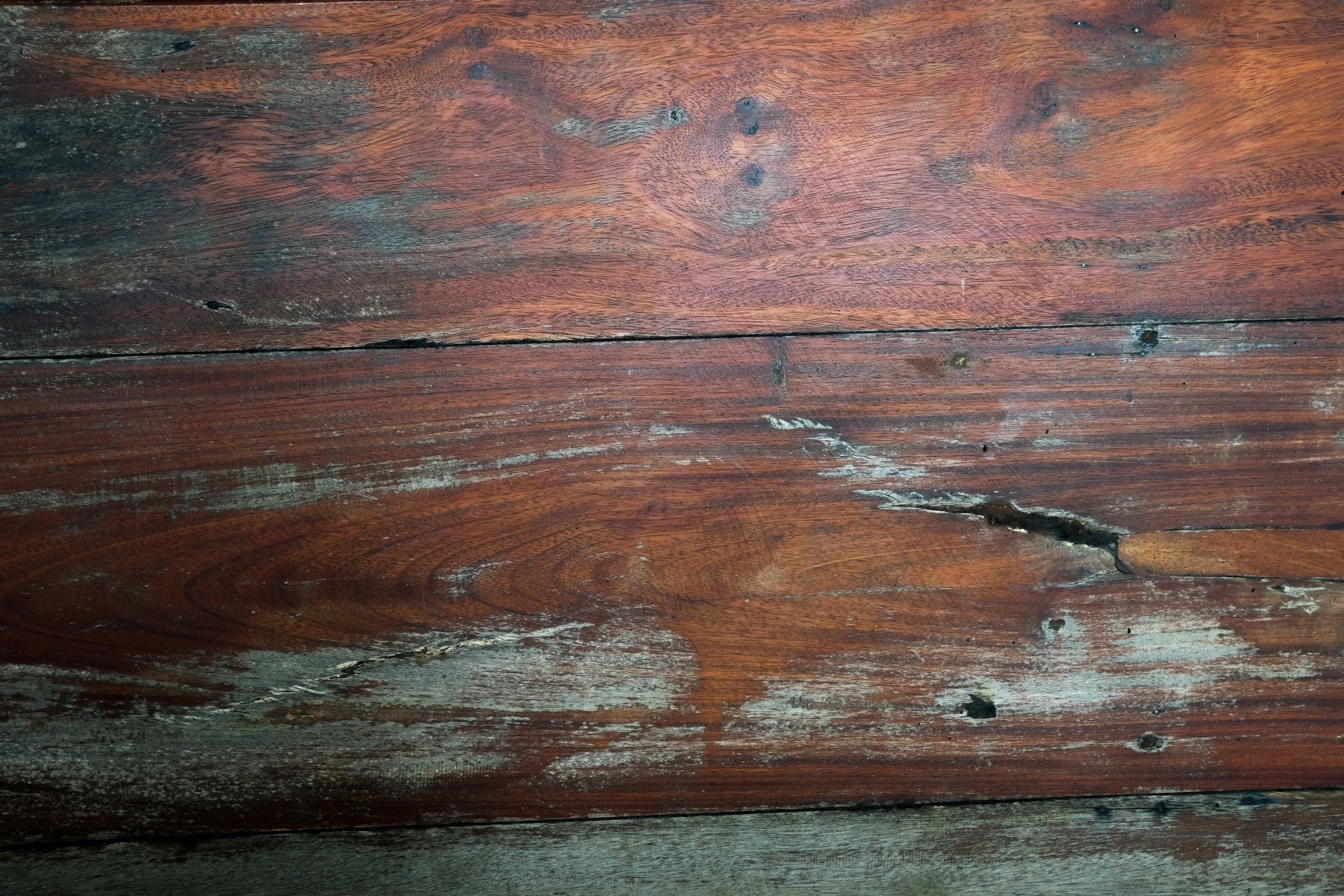
This kind of checking along a seam is wood doing exactly what wood does when humidity swings. It is not necessarily a sign of a deeper problem, but worth addressing before it is.
