
How to Tell If an Antique Is Worth Restoring
Almost every restoration conversation starts the same way: someone has a piece (inherited, found at an estate sale, pulled out of a garage) and they don't know if it's worth saving. It's a fair question, and an honest answer takes more than a glance.
The first thing we look at is construction, not condition. A piece built from solid wood with real joinery (mortise-and-tenon, dovetails, hand-cut dowels) was made to be repaired. Damage to a well-built piece is usually fixable, even when it looks bad. A piece built from veneered particleboard or glued-and-stapled joints generally wasn't built with restoration in mind, and money spent restoring it rarely comes back in value or longevity.
The second thing is what the piece is made of. Solid hardwoods (walnut, oak, mahogany, cherry) hold up to sanding, refinishing, and structural repair far better than softwoods or manufactured materials. That's not a value judgment on the piece; it's just a practical limit on what restoration can do.
The third thing, and often the deciding one, has nothing to do with wood at all: does it matter to you? A piece with real sentimental or historical weight like your grandmother's sideboard or a chair that's been in the family for three generations is often worth restoring even when the economics alone wouldn't justify it. We'll always tell you honestly what we see in a piece. Sometimes that means recommending against restoration. More often, it means explaining why a piece you weren't sure about is worth the investment after all.
If you have a piece you're unsure about, a consultation costs nothing and comes with no obligation. Bring photos, or bring the piece itself — we're happy to take a look and give you a straight answer.
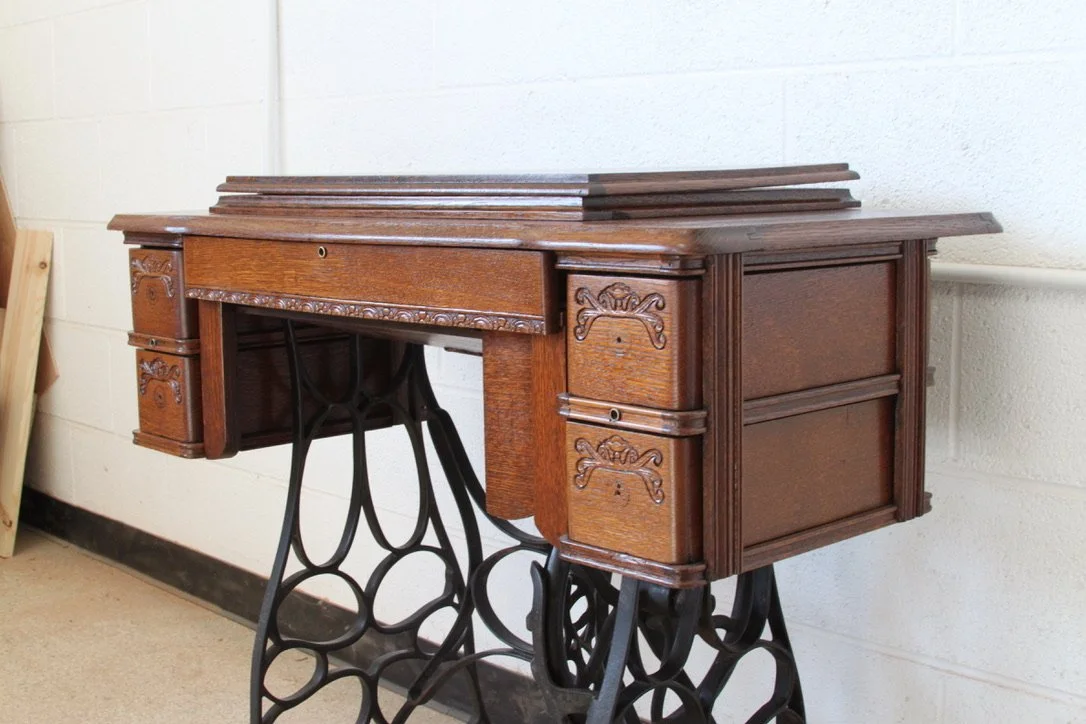
The treadle sewing machine cabinet after restoration, original carving and ironwork preserved, finish revived rather than stripped.
